High school student interested in engineering and technology. Driven by curiosity to build embedded hardware with the ESP32 and self-learn 3D design in Blender.
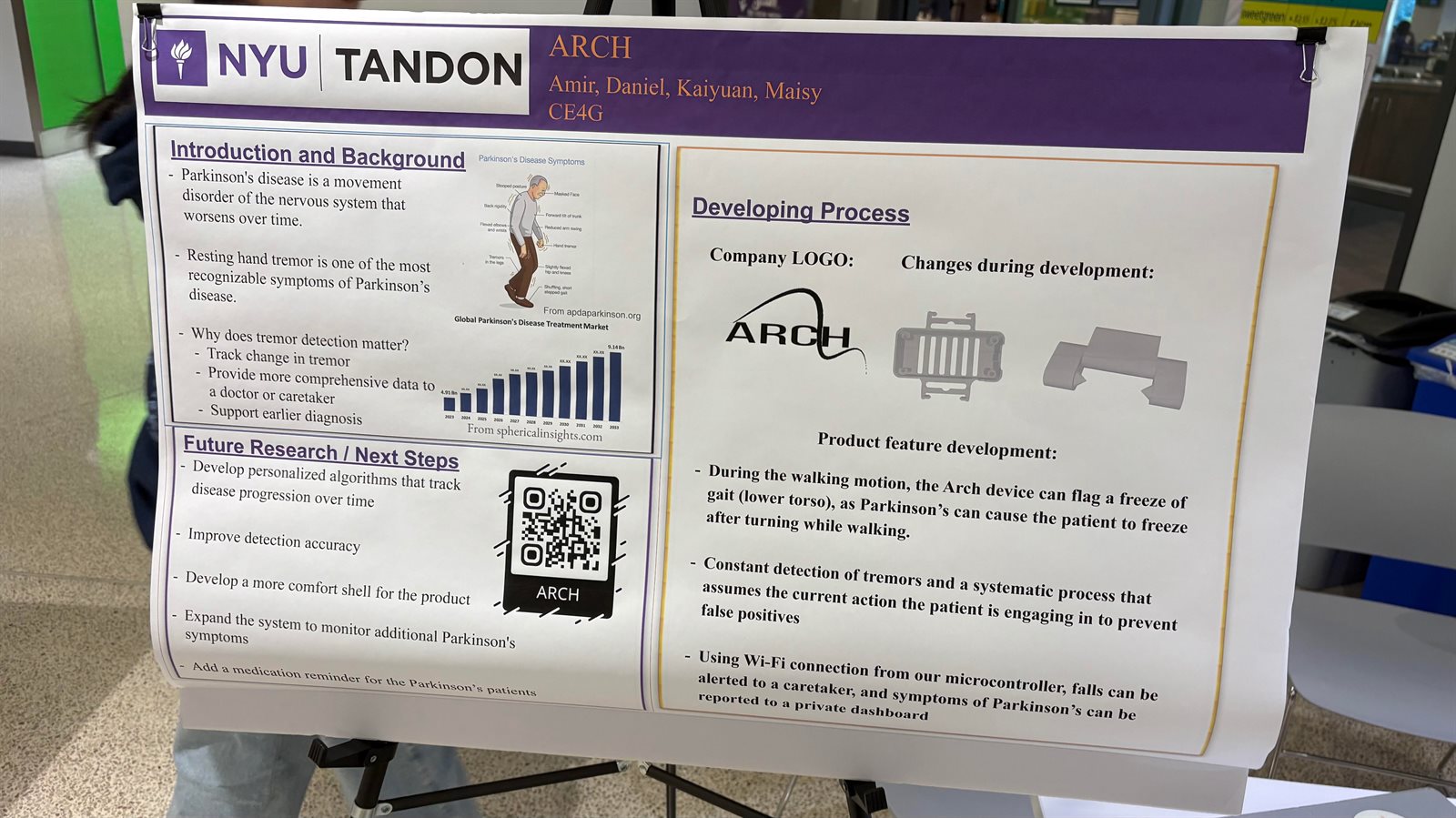
A wearable wrist device designed to help track Parkinson's disease progression by detecting resting tremors, estimating severity, and flagging episodes of freezing of gait (FoG).
I collaborated with a team of four (Amir, Daniel, Kaiyuan, Maisy) and focused on the detection algorithm and the embedded finite state machine running on the ESP32. We trained a lightweight classification model on manual simulated tremor data: the algorithm maps incoming 3D spatial motion vectors against our dataset clusters in 3D coordinate space, calculating confidence based on geometric proximity to flag tremors and prevent false positives during regular walking.
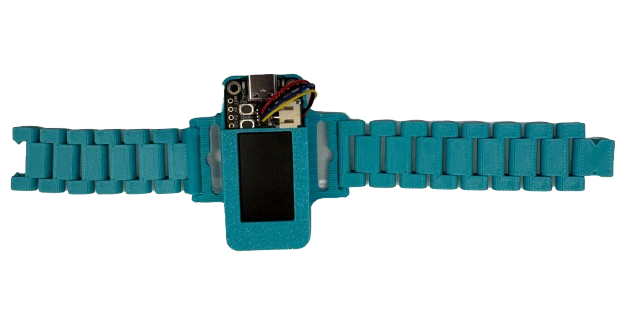
Assembled wearable unit with ESP32 board, display, and articulated 3D-printed wristband.
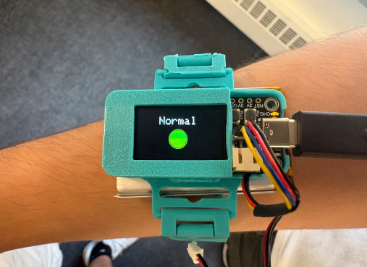
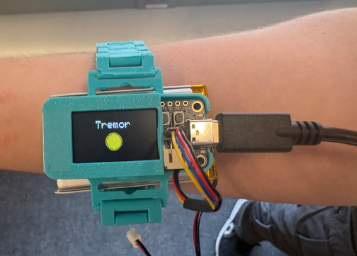
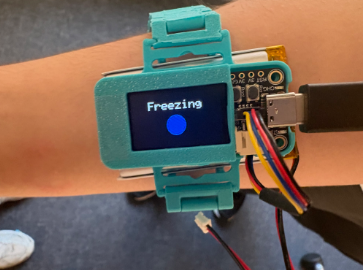
Normal (rest / clear)Tremor detectedFreezing of gait
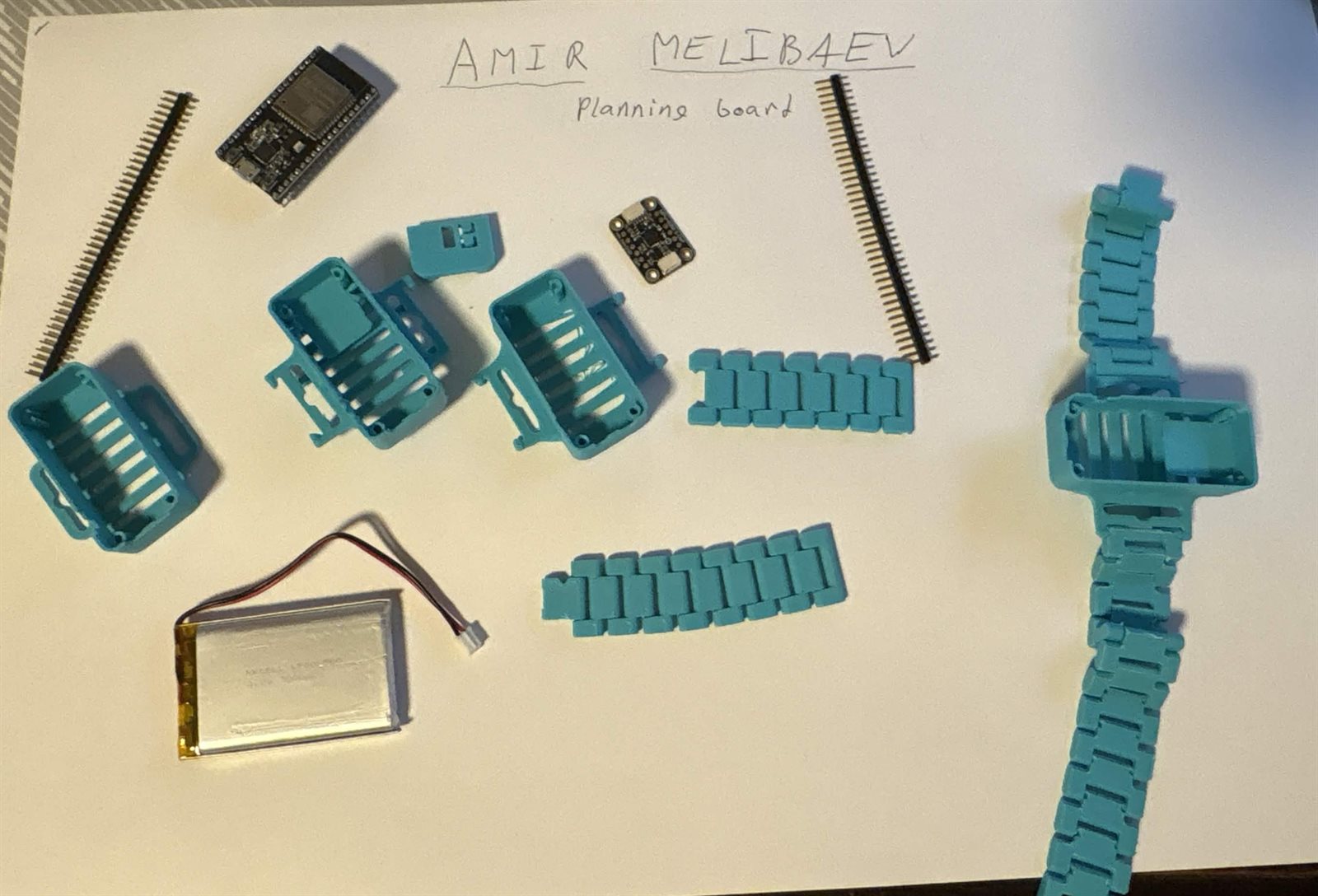
Hardware planning board: ESP32 board, IMU sensor, LiPo battery, and 3D-printed casing components.Project poster presentation at the NYU Tandon School of Engineering.
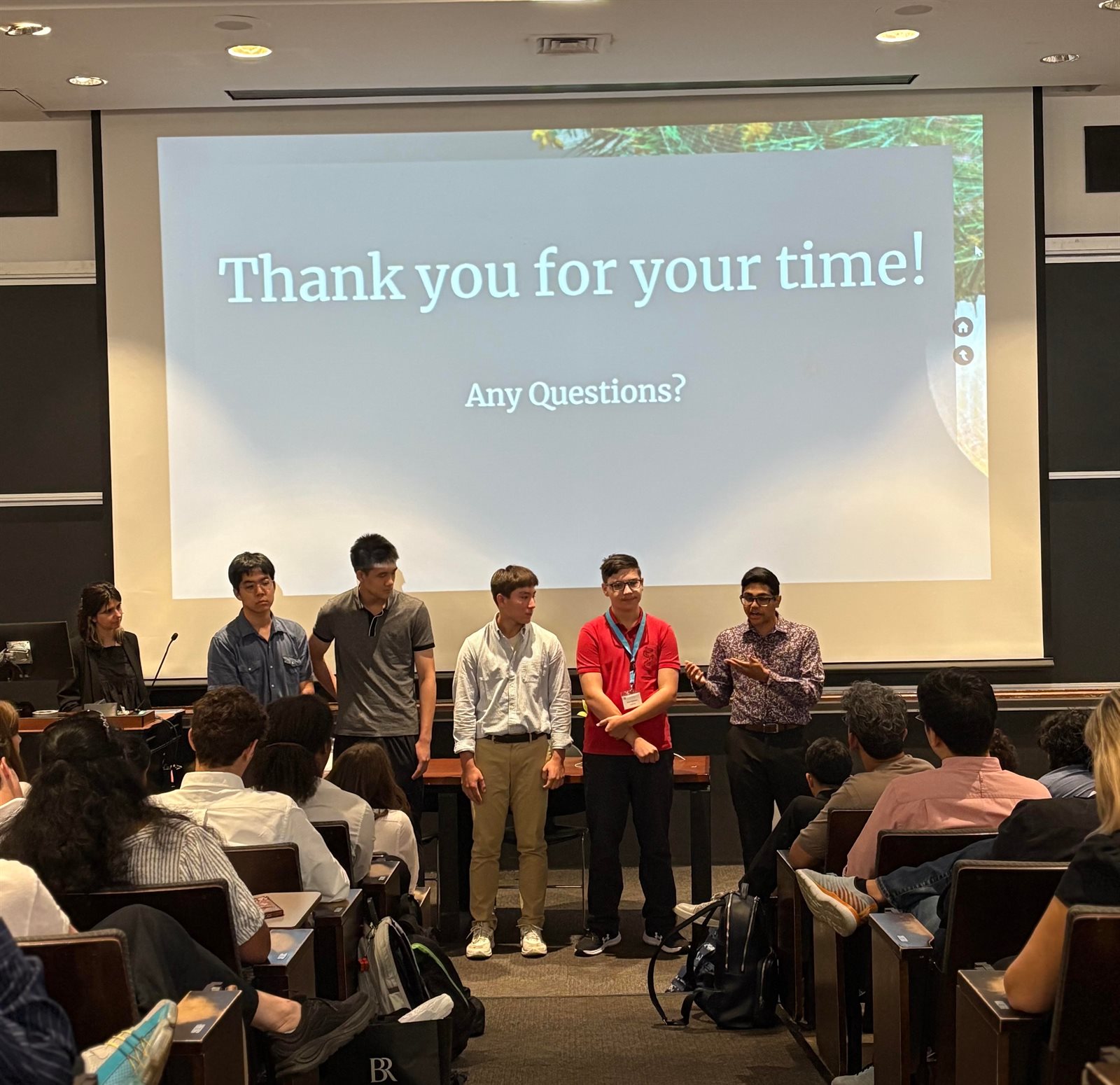
Research presented with my team at Columbia University analyzing rapid power restoration after major natural disasters. We developed an optimization model to determine the most strategic spatial deployment of portable small modular micro-reactors based on individual reactor power output, transmission constraints, and population density to maximize emergency coverage.
Presenting our disaster relief power optimization research at Columbia University.
ESP32 Weather Station
ESP32 • I2C Sensor • LiPo • First Hardware Project
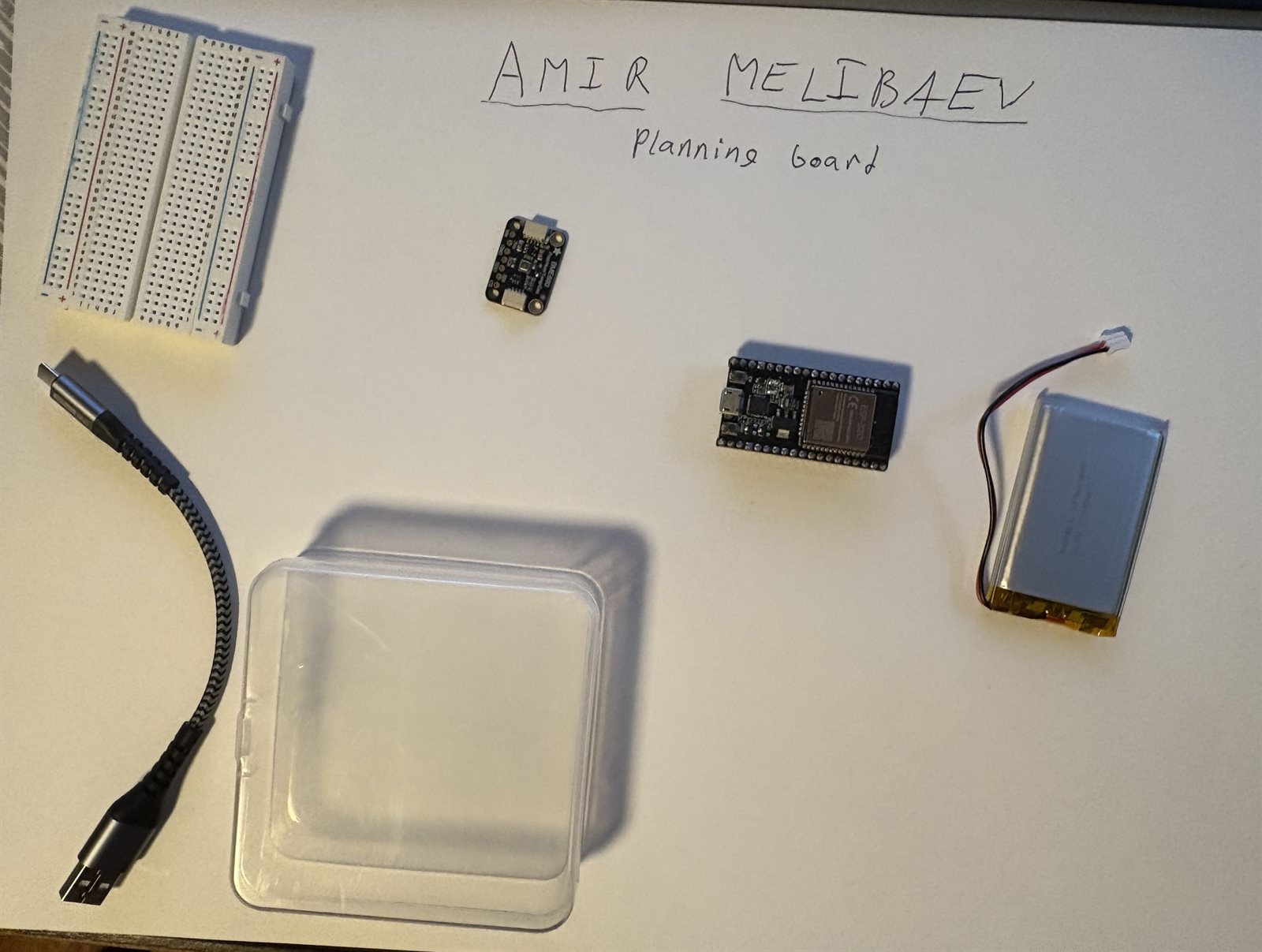
An environmental monitoring unit reading temperature, humidity, and atmospheric data over I2C on an ESP32. Since I didn't have access to a 3D printer at the time, I repurposed a clear plastic food container as the protective housing for the board, sensor, and battery.
This project was what got me into this whole hardware and microcontroller journey in the first place.
Hardware layout: ESP32, environmental sensor, battery, and the plastic container enclosure.